
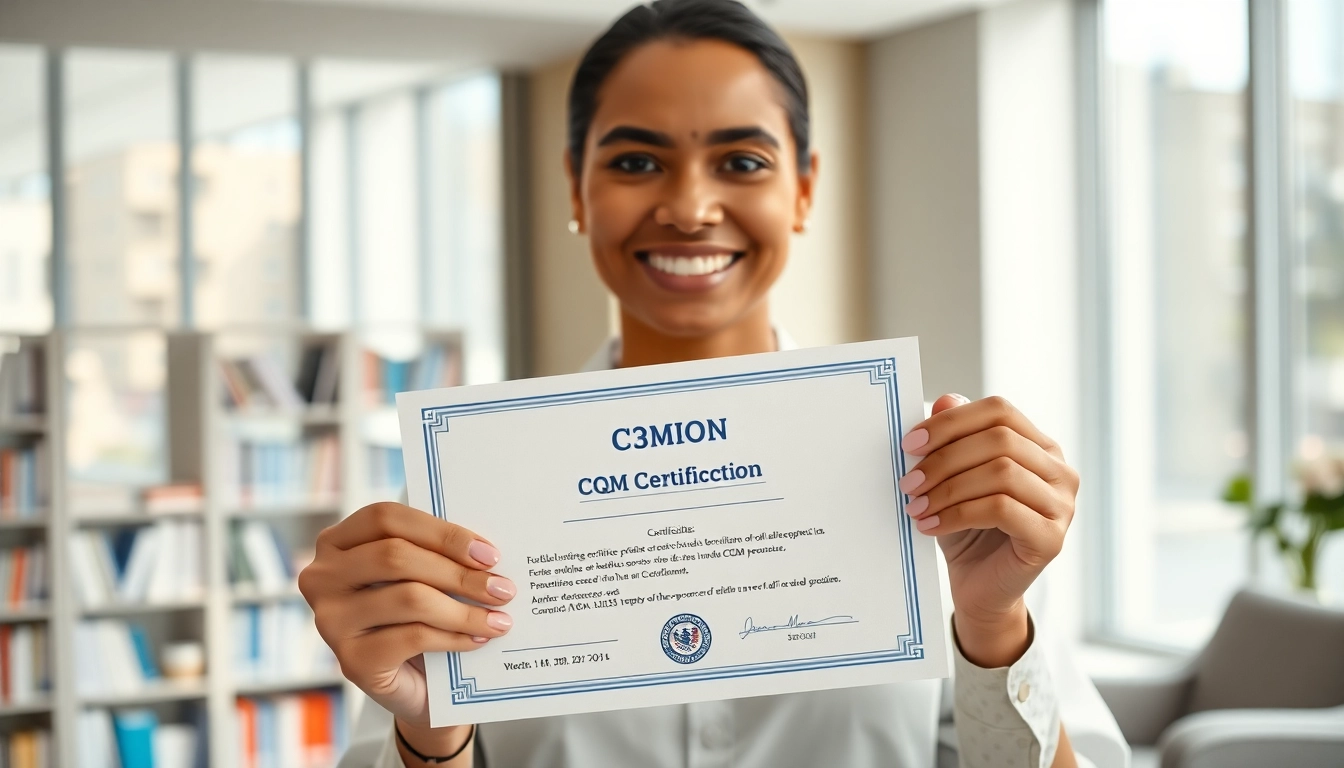
What is CQM Certification?
Definition and Scope
Certified Quality Manager (CQM) certification is a credential designed for professionals in the healthcare sector, emphasizing their knowledge and expertise in quality management practices. This certification highlights a commitment to improving patient care and ensuring organizational compliance with stringent healthcare standards. The scope of CQM certification extends across various functions in healthcare management, including quality assurance, risk management, and process improvement. It focuses on the integration of quality management systems within healthcare organizations to foster a culture of continuous improvement.
History and Development
The CQM certification has evolved alongside the healthcare industry, adapting to changing regulations and methodologies. Originally founded to address the need for standardized quality measures in healthcare, CQM certification has progressively incorporated advanced principles and practices relevant to today’s complex healthcare environments. Over the years, this certification has drawn upon research and best practices from both healthcare and management fields, positioning itself as a vital credential for professionals who aim to implement effective quality management strategies in healthcare settings.
Significance in Healthcare
CQM certification holds significant importance in the healthcare landscape. With increasing pressure to enhance patient outcomes and operational efficiency, certified professionals play a key role in shaping quality initiatives. The certification fosters critical competencies in understanding regulatory compliance, data analysis, and requirement fulfillment necessary for delivering high-quality healthcare services. By promoting standards across organizations, CQM-certified individuals contribute to the establishment of systematic processes that improve care delivery, enhance patient satisfaction, and drive institutional excellence.
Benefits of CQM Certification
Career Advancement Opportunities
Obtaining a CQM certification can dramatically improve career prospects for professionals in the healthcare field. It signals to employers a commitment to quality and a solid understanding of healthcare processes. This certification enhances a candidate’s potential for promotions and can lead to more specialized roles such as quality director or healthcare consultant. Many managers and administrators actively seek individuals with the CQM designation, recognizing its value in the increasingly competitive job market.
Enhanced Quality of Care
CQM certification not only propels personal career growth but also enhances the overall standard of patient care. Individuals certified in quality management possess the knowledge to implement evidence-based practices that lead to better health outcomes. The expertise in analyzing performance metrics and patient feedback ensures that healthcare delivery is not only effective but also responsive to patient needs. Organizations benefit from having CQM-certified professionals who devise quality improvement plans that translate into tangible improvements in patient safety and satisfaction.
Networking and Professional Growth
CQM certification opens numerous avenues for networking and professional growth. Certified professionals often gain access to exclusive industry events, workshops, and forums that facilitate the exchange of ideas and best practices. Engaging with other quality leaders allows for collaboration on innovative projects and sharing of resources which can enhance personal development and lead to career opportunities. The relationships built through these networking platforms can serve as vital resources throughout one’s career.
How to Achieve CQM Certification
Eligibility Requirements
To qualify for CQM certification, candidates typically need a combination of educational and professional experience in healthcare quality management. While formal prerequisites may vary, having a background in healthcare and leadership roles will provide a competitive edge. Many organizations recommend professionals hold a minimum of a bachelor’s degree in a relevant field and possess several years of experience working in quality assurance or healthcare administration.
Preparation Strategies
Effective preparation for the CQM certification exam involves a multi-faceted approach. Candidates should begin by familiarizing themselves with the exam outline and key topics covered. Study groups, online courses, and tailored reading materials can provide support and enhance understanding of critical concepts. Developing a timeline for study sessions, practicing with mock exams, and evaluating progress regularly help candidates stay on track and build confidence leading up to the exam.
Examination Process
The examination process for CQM certification typically involves a comprehensive assessment that tests the applicant’s knowledge across various domains of quality management. Candidates can expect a mixture of multiple-choice and scenario-based questions designed to evaluate their analytical skills and decision-making capabilities in real-world situations. Preparation and mastery of the subject matter are critical, as the exam is known for its rigor. Successful completion of this examination earns the candidate the prestigious CQM certification.
Common Challenges in CQM Certification
Understanding Complex Standards
One of the primary challenges faced by candidates pursuing CQM certification is grasping the complex standards set forth in quality management frameworks. Healthcare regulations and guidelines can be multifaceted and daunting to comprehend. To tackle this, candidates should focus on breaking down these standards into manageable sections and utilize visual aids, such as charts and infographics, to enhance understanding.
Time Management for Studies
Balancing study time with professional and personal commitments can be challenging for many candidates. Establishing a realistic study schedule is essential to ensure all topics are adequately covered before the exam. Employing time management tools, such as planners or digital apps, can help maintain a consistent study regimen while allowing flexibility for unexpected changes in one’s schedule.
Finding Reliable Resources
Identifying trustworthy resources for preparation is crucial for success on the CQM certification exam. Candidates should seek official study materials and reputable online courses that follow the exam outline closely. Peer-reviewed journals can also offer insights into current trends and practices in quality management, assisting candidates in applying theoretical knowledge to practical situations.
FAQs on CQM Certification
What is the cost of obtaining CQM certification?
The cost may vary depending on the course and exam fees, typically ranging from $500 to $1,200.
How long does it take to prepare for the CQM certification exam?
Preparation can take from a few weeks to several months, depending on your background knowledge and study schedule.
Are there prerequisites for CQM certification?
While there are no formal prerequisites, a background in healthcare quality management is beneficial.
How often do I need to renew my CQM certification?
CQM certification typically requires renewal every three years to stay current with industry standards.
What job roles benefit from CQM certification?
Roles like quality manager, compliance officer, and healthcare administrator greatly benefit from CQM certification.
For more comprehensive understanding and resources regarding cqm certification, professionals are encouraged to visit dedicated websites that offer support and information tailored to certification paths.